
Näytetään tekstit, joissa on tunniste Master copy. Näytä kaikki tekstit
Näytetään tekstit, joissa on tunniste Master copy. Näytä kaikki tekstit
maanantai 1. lokakuuta 2012
Drawing study

lauantai 22. syyskuuta 2012
Ingres copy: finished!


I read somewhere (James Gurney's instructional book Imaginatice Realism) that mastercopying is a traditional practice, romantically considered a transcendence rite in which the student absorbs the previous great master's skills and spirit and analyses the masterpiece's composition, value control, figurative structure, anatomy knowledge, craftsmanship, technique, palette use, drawing, texture portrayal and tries to feel the same emotion the painter must have felt while painting the subject. I essence, meditating on the beauty and intelligence of the work. Therefore it is important to pick only the classic works by the finest figurative painters in history since even the greatest painters sometimes produced mediocre work and copying mediocre works only enhance mediocrity so it must be avoided.
The Valpincon Bather is considered the greatest nude painting of the 19th century, one of the definitive figure paintings in entire art history alongside Velazquez's Rokeby Venus. Valpincon Bather is Ingres' calmest painting as his other paintings of the female figure were quite wild, the scholar Gerald Ackerman commented even "perverse" (in Gerômé: Life and Works). Ingres' paintings are some of the most meticulous and finished to the highest degree in art history. This finishing and simplified classicising is what I wanted to learn from Ingres as well.
After summer break, back in Rovaniemi, I immediately began finishing this master copy, as documented in the blog post on late spring. I bought a pair of 4000 kelvin cool light bulbs for better lighting and painted from Friday August 31 till tuesday September 4 late night, detail after detail, zooming the reference image from computer screen. The deadline was on Friday, September 7, and the work was almost dry then. The teacher simply commented that this is "a stunning display of patience."

It could be the camera distortion but the right shoulder seems just a bit too wide, and the curtains still need some fine tuning.
By the way, I also finished the self-portrait.
sunnuntai 26. elokuuta 2012
Late summer studies and pocket sketches

I read a book about the American Golden age of illustration and made master study of Charles Dana Gibson's iconic pen-and-ink drawing. A fraction of a millimeter makes a difference in such a delicate profile.


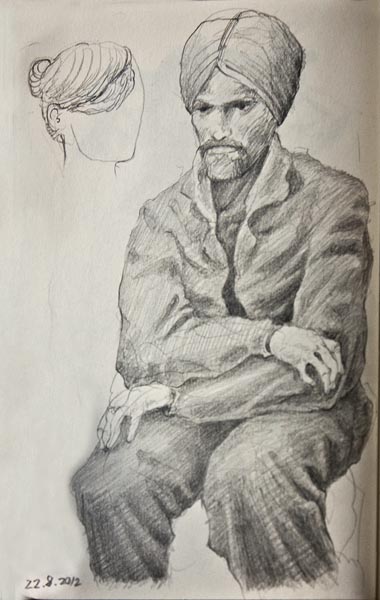


My summer job is over. I used every chance to draw from life when I could. These pocket sketchbooks were really handy. Drawing from life is like doing push-ups for the mind. I used the Reilly method to capture gesture from moving figure and then relied on memory more or less.
lauantai 23. kesäkuuta 2012
Rubens study


I also now understand better why the masters seldom showed unfinished pieces to anyone except for other artists because until the final detailing stage the painting usually looks pretty dreadful, and people may not understand the process. And because the faces are center of focus they need lots of work hours to paint until they look correct which is crucial for the painting's success.
keskiviikko 18. huhtikuuta 2012
Master copy WIP (updated, May 4)


See latest stage here (September 4): Ingres copy almost finished
May 4, working on background and details
We're having a drawing and painting course where we need to copy some
piece of art. I chose The Valpincon Bather by the French master Ingres
in order to practice the very difficult nude painting genre, particularly depicting skin, as an
arguably logical continuity for the intensive life study workshop I
attended and also because figure painting and drawing is a classical measure of artists skills and some videogame, film and animation studios may ask for references of figure painting for evaluation of the concept artist or animator candidate's skill level.
Here's the initial charcoal drawing, then the underpainting stage where I have drybrushed titanium white on earth green. Then on to glazing and background.
Here's the initial charcoal drawing, then the underpainting stage where I have drybrushed titanium white on earth green. Then on to glazing and background.
Friday May 20 I added some glazing and worked the surroundings further. Sorry for the bad cell phone photo, the flash light reflects from the wet surface unfortunately. It was difficult to find decent reference images of the painting, some were obviously taken at close range, giving a bit fish-eye effect which explains the strange wide shoulders. This is 120x80cm, 80% of the original's size and I have to speculate the colors between several reference images, thus, I'm putting my expectations to 80% success for the time being.
sunnuntai 31. heinäkuuta 2011
Rafael study

 Study of Rafael Sanzio's drawing. Sanguine oil pastel pen on A3 sketchbook. I used a lot of sandpaper to sharpen the pen. Copying old masters gives confidence and helps to get proper understanding of draughtsmanship. Jose Parramon stated in the reference book that in order to be a good painter, you have to be an even better draughtsman. Edit: scanned version added.
Tilaa:
Blogitekstit (Atom)